Political Parties Moving in Their Own Directions

- Update Time : Saturday, 25 October, 2025, 11:34 pm
- 68 Time View

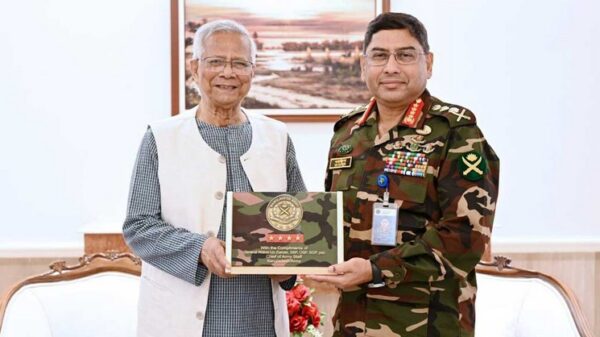
Putting an end to weeks of speculation and discussion, the July Charter was officially signed on October 17, with leaders from 25 political parties and alliances endorsing it. Interim Government Chief Adviser Dr. Muhammad Yunus described the event as “the beginning of a new Bangladesh.” However, despite the signing, political divisions remain — and in some cases, have deepened further.
Divisions and Conflicting Demands
While the National Consensus Commission continues to hold meetings with experts on the implementation of the July Charter, several political parties are questioning the neutrality of the interim government. Concerns about whether the upcoming election will be held on time are also growing.
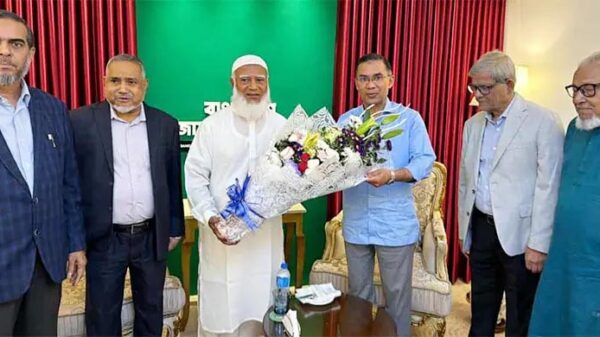
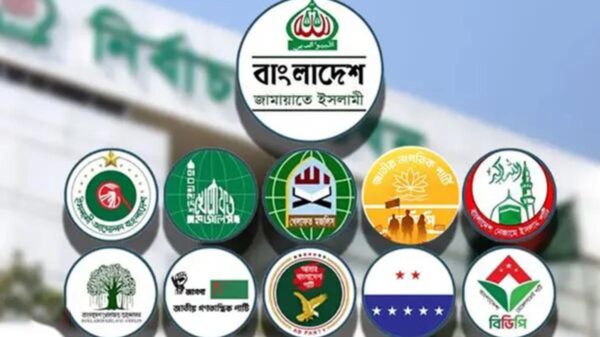
Seven political parties, including Jamaat-e-Islami, have already taken to the streets with their own agendas. Recently, several party leaders met with the Chief Adviser to present their individual demands and positions — making it clear that the parties are still far from unified.
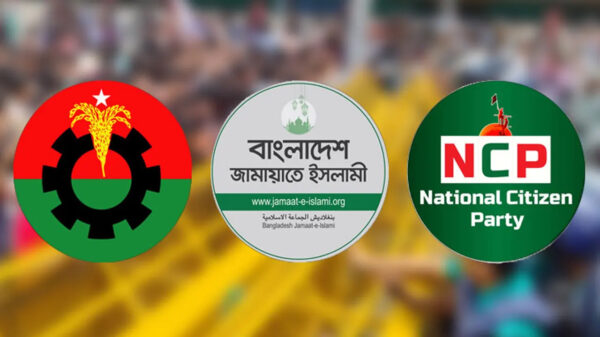
Jamaat-e-Islami has declared that it will not participate in the election unless its demands are met. Meanwhile, the National Citizen Party (NCP), born out of the July Uprising, insists it will not contest without its preferred “Shapla” (water lily) symbol. BNP leaders have also met with the Chief Election Commissioner to raise issues about polling agents and election management, adding more complexity to the upcoming national polls.
Interim Government’s Position
The interim government remains confident that the national election will be held in February 2026. Dr. Yunus has assured that the government’s neutrality “should not be doubted.” Yet political uncertainty continues to rise.
BNP Secretary General Mirza Fakhrul Islam Alamgir stated, “We are cooperating with the interim government to make an acceptable election possible. But it’s disappointing that some parties seem to be trying to delay the election. That’s not right.”
Debate Over Referendum and Election Timing
Jamaat-e-Islami Ameer Dr. Shafiqur Rahman, speaking at a discussion in New York, said, “Holding a referendum and the national election on the same day is illogical — it would weaken both processes.” He proposed that the referendum be completed by November to avoid delays that could lower voter turnout.
He added, “People are eager to vote after being deprived for three elections. We want the polls to be held before Ramadan — by February at the latest. Otherwise, doubts and crises will deepen.”
NCP Convener Nahid Islam stated after meeting Dr. Yunus, “Without our symbol, we can’t join the election. The Election Commission’s behavior doesn’t seem neutral or transparent. We’re also seeing politically biased appointments in the administration, which raises questions about the fairness of the process.”
Analysts’ Perspectives
Political analysts believe that for the sake of national stability and progress, all parties must come together under the July Charter to pave the way for a free, fair, and credible election.
Dhaka University political scientist Dr. Kazi Mohammad Mahbubur Rahman said, “The fact that most parties signed the July Charter shows a degree of unity. Political competition is natural — parties are trying to maintain relevance and mobilize supporters.”
He added, “As the election approaches, parties will eventually have to find common ground. Some demands will need to be compromised through political dialogue — that’s how consensus will emerge.”
The continuing disagreements and rival agendas among Bangladesh’s major political parties are heightening uncertainty ahead of the next national election. Yet analysts insist that only mutual understanding and genuine implementation of the July Charter can ensure a peaceful, transparent, and credible democratic transition.