INTERVIEW · ENVIRONMENTAL ENGINEERING & INNOVATION A Conversation with Taufiqur Rahaman on Innovation in Environmental Monitoring and Water Systems
- Update Time : Thursday, 11 June, 2026, 08:22 pm
- 0 Time View
INTERVIEW · ENVIRONMENTAL ENGINEERING & INNOVATION
A Conversation with Taufiqur Rahaman on Innovation in Environmental Monitoring and Water Systems
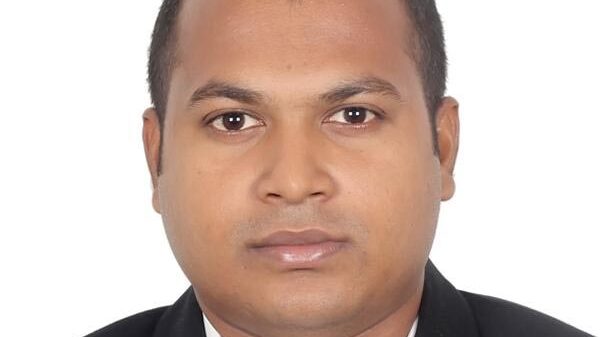
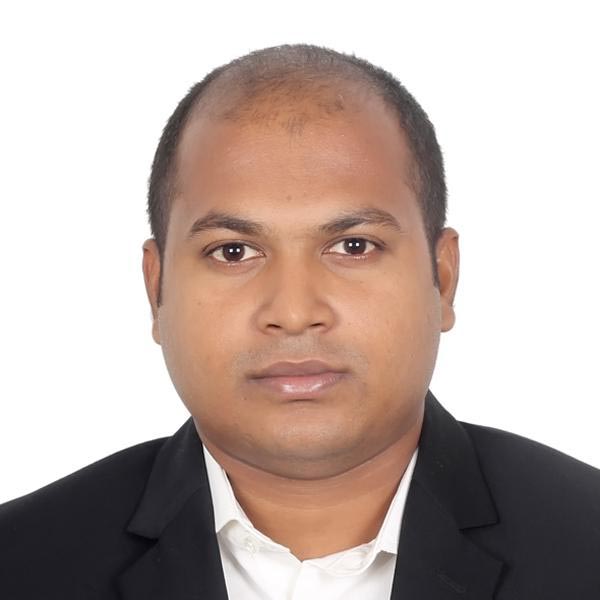
Conducted by the Science & Innovation Desk : Taufiqur Rahaman is an environmental engineer with a Master of Science from Lamar University and an ongoing doctorate in industrial engineering. His research addresses the modernisation of United States environmental infrastructure through AI-integrated monitoring frameworks, advanced water and wastewater treatment, circular-economy resource recovery, and GIS-based environmental data analytics. His publication record comprises six peer-reviewed articles, more than sixty independent citations, an h-index of four, and an i10-index of three, including a single-authored 2025 paper that ranks in the top one per cent of its field for the year of publication. The following is an edited transcript of a two-hour conversation, condensed for length and clarity.
Background and Research Record
- You spent several years in industry, designing and commissioning industrial wastewater treatment systems, before establishing your research record. How has that experience shaped your approach?
- It has been formative. Industrial practice imposes a discipline that purely academic work does not always require. A model that performs well in a presentation is of little value if it cannot withstand the conditions of an operating plant, fouling, incomplete data, and the practical judgement of experienced operators.
Consequently, when I design a system today, my first question is whether the professional responsible for that plant would actually rely upon it in practice. If the answer is no, the work is not yet an innovation; it is a proposal. Those years gave me a respect for deployability that continues to govern my research priorities.
- Your 2025 single-authored paper on smart environmental monitoring ranks in the top one per cent of the field for its year. What significance do you attach to that result?
- It is a meaningful indicator, though I am cautious about overstating any single metric. A single-authored paper carries full individual accountability, which I regard as appropriate for foundational work of this kind.
What matters most to me is the independence of the citations. The paper has accumulated twenty-five independent citations, and approximately ninety per cent of my citations originate from researchers with no co-authorship connection to me, drawn from more than fourteen countries. That pattern indicates genuine, unsolicited adoption of the methodology by the international research community, which is the most credible evidence that the work is useful.
- Your portfolio includes an h-index of four and an i10-index of three across six publications. Which of these measures do you consider most informative?
- The distribution of impact, rather than any single figure. The h-index of four indicates that citation impact is spread across the body of work and is not concentrated in one publication, which I consider a healthier signal of sustained relevance.
My second most-cited work, for instance, is a study applying Differential Interferometric Synthetic Aperture Radar to the prediction of mining-induced ground subsidence. It addresses a different subject entirely, yet it underpins the geospatial dimension of my current research. I would rather have several publications that each find a genuine audience than a single result that is not reinforced by the remainder of the portfolio.
The Research Programme
- Your work spans environmental monitoring, advanced filtration, circular-economy wastewater systems, and geospatial analytics. What unifies these areas?
- The common challenge is fragmentation. The relevant data already exists across the Environmental Protection Agency, the United States Geological Survey, state agencies, and municipal utilities. The difficulty is that it resides in separate systems that do not communicate with one another.
My objective is not to generate new data for its own sake, but to render the data we already fund genuinely usable, in real time, by the officials responsible for decisions. Filtration addresses treatment; monitoring verifies that treatment has succeeded; the circular-economy work improves the economics that fund both; and the geospatial layer makes the results legible to regulators managing many competing priorities. The four areas reinforce one another.
- Could you summarise the monitoring framework itself?
- It integrates networks of low-cost sensors with machine-learning models trained to detect anomalies in air and water quality before they would be apparent to a human observer, and to communicate those findings to the agencies and utilities able to respond.
A common assumption is that meaningful improvement requires costly hardware. In my view, that is mistaken. A modest sensor can provide reliable information if the analytical model behind it is sufficiently capable. The central principle of the work is to relocate the sophistication from the hardware to the model, which makes the system far more affordable to deploy at scale.
- Why does conventional treatment fall short on contaminants such as PFAS, nitrates, and heavy metals?
- Because the contaminant profile has changed while much of the treatment infrastructure has not. Substances such as PFAS, nitrates, and certain heavy metals pass through systems that were designed for an earlier generation of pollutants.
The scale of the problem is considerable: approximately forty million Americans are served by systems that exceed current PFAS health limits. My filtration research therefore focuses on membrane and nano-filtration and on hybrid biological-chemical systems, benchmarked against realistic groundwater contamination profiles rather than idealised laboratory conditions, because field conditions are where these technologies must ultimately perform.
- You describe wastewater treatment plants as an opportunity rather than simply a cost. Could you elaborate?
- A conventional treatment plant discards recoverable energy and nutrients. United States plants account for an estimated two per cent of national electricity consumption, and much of the available biogas, nitrogen, and phosphorus is not captured.
Operated as a circular system, a plant can offset the cost of its own modernisation through energy recovery, nutrient reclamation, and treated-effluent reuse. This is an economic argument as much as an environmental one. If the objective is to encourage utilities to modernise, demonstrating a favourable effect on their operating budget is generally more persuasive than appeals to principle alone.
Artificial Intelligence and Reliability
- Your research depends heavily on artificial intelligence, yet you express reservations about how the term is used. Why?
- In the context of environmental regulation, a system that cannot be examined or explained represents a liability. If a model identifies a contamination event and a municipality commits resources in response, that decision must be defensible — in administrative review and, potentially, in legal proceedings.
For that reason the model must be testable, the resulting decision must be traceable, and a qualified individual must remain accountable within the process. The substantive engineering challenge lies in making such a system trustworthy, not merely capable. Capability is now widely available; demonstrable reliability is the more difficult achievement.
- You moved into industrial engineering for your doctorate. What does that discipline contribute that environmental engineering did not?
- Environmental engineering established what to measure; industrial engineering provides the methods to ensure that the measurement remains valid under real operating conditions — reliability analysis, processes that degrade gracefully, and performance at scale.
I regard these as two halves of a single competency. A sensor that is accurate in the laboratory but unreliable in the field has limited practical value. I aim to design systems that fail in a controlled and predictable manner, in the way that well-engineered infrastructure does.
- What failure mode concerns you most?
- Automated systems that are neither well understood nor clearly owned. A dashboard that is confidently incorrect can be more hazardous than no dashboard at all, because users may cease to scrutinise it.
I therefore design for adverse conditions rather than for demonstrations: sensor drift, missing data, and model uncertainty must all be handled explicitly. A system that conceals its own uncertainty is a hazard rather than a tool.
Strategy and Outlook
- You have structured your career to work across multiple institutions rather than within a single organisation. What is the rationale?
- The value of this work lies in its capacity to operate across institutional boundaries — federal, state, municipal, and academic. A single-employer arrangement would necessarily narrow the work to that organisation’s priorities.
My current collaborations span a university research department and a state transportation agency, and I am adapting data-engineering methods validated on a statewide monitoring system for environmental application. The endeavour is inherently multi-institutional, and I believe its national benefit is best realised by preserving that breadth.
- Your five-year plan is notably specific. Could you outline it?
- The coming year is dedicated to foundation: a monitoring pilot, the design of the geospatial data platform, and initial engagement with federal funding programmes. The subsequent phase involves deployment across municipalities, validation against operational infrastructure data, and a wastewater pilot.
By the conclusion of the decade, I intend the platform to be adopted across multiple agencies and utilities, and I hope to contribute to national recommendations on water-infrastructure management. The objective is not recognition for its own sake, but the responsible application of expertise where it can be of public benefit.
- Finally, how would you define success for your research?
- The most effective infrastructure is that which operates unnoticed. A reliable monitoring system functions quietly, providing timely warning when conditions deteriorate so that intervention remains possible. If I can establish such a system, and if it reduces preventable harm to public health, then the work will have served its purpose. That outcome is the measure of success I value most.
Taufiqur Rahaman is an environmental engineer and doctoral researcher at Lamar University. His research spans AI-integrated environmental monitoring, advanced water and wastewater treatment, circular-economy resource recovery, and GIS-based environmental data analytics. This is an illustrative profile; the questions and responses are composed for the purposes of this piece and do not constitute a verbatim record of a published interview.
Email: ruetrony@gmail.com