Govt preparing to launch second satellite : Telecom Minister

- Update Time : Tuesday, 19 May, 2026, 02:20 pm
- 1 Time View
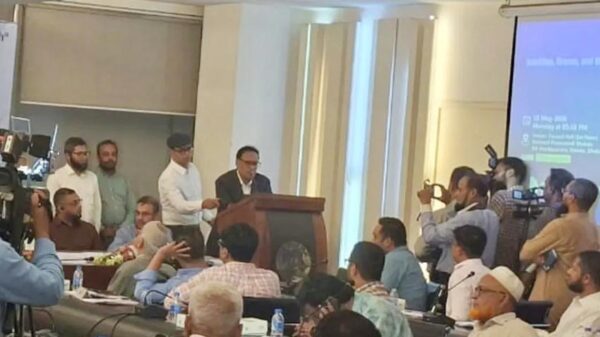
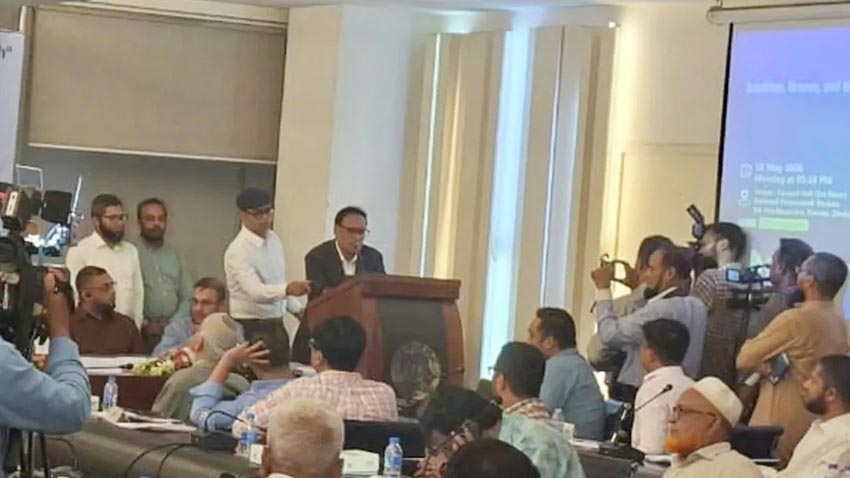
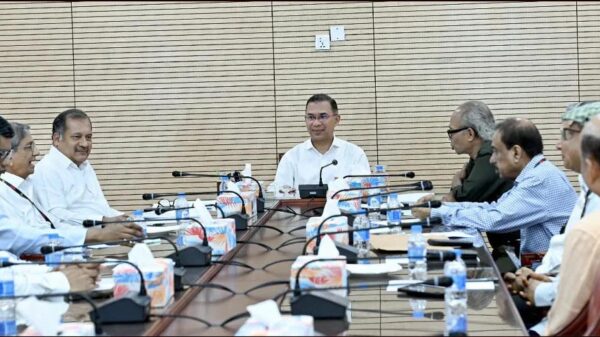
Online Desk : Posts, Telecommunications and Information Technology Minister Fakir Mahbub Anam on Monday said the government is preparing to launch country’s second satellite in low Earth orbit (LEO) to ensure clearer images and faster data collection. He made the remarks while addressing a seminar titled “Satellite Drones and the Future of Space Technology in Bangladesh” at the Institution of Engineers Bangladesh (IEB) headquarters in the capital.
The minister said Bangladesh entered the satellite era in 2018 as the world’s 57th country to operate its own satellite and that the existing satellite has already become profitable. “So far, the satellite has generated a profit of around Tk 38.35 crore,” he said. Fakir Mahbub Anam said the government does not view space technology as a luxury but as an important infrastructure for national development.
He said the demand for satellite technology is increasing rapidly in communication, broadcasting, remote sensing and data collection sectors, adding that it is already contributing to disaster management, agriculture and fisheries. The minister said the government is working on introducing satellite-based early warning systems for coastal fishermen so that deep-sea fishing boats can receive alerts ahead of cyclones and adverse weather conditions.
“Every year many fishermen lose their lives in the sea due to sudden disasters. Satellite technology can help reduce such risks”, he added. Highlighting the use of satellite technology in agriculture, he said high-resolution satellite imagery would help monitor floods, river erosion, cyclone damage and the condition of croplands. He also said drone technology is no longer limited to photography but is now being used for state security, border surveillance, coastal monitoring and agricultural management.
The minister said the government plans to place the new satellite at an altitude of around 500 kilometres instead of 36,000 kilometres, enabling faster and more accurate information collection. He urged universities and research institutions to expand work on space data, ground station design, satellite applications and drone technology and called for joint initiatives to develop student satellite projects, certification programmes and space-tech startups.