Nearly Two Children Die Every Hour in Bangladesh Due to Air Pollution: Study

- Update Time : Thursday, 16 October, 2025, 11:02 am
- 140 Time View
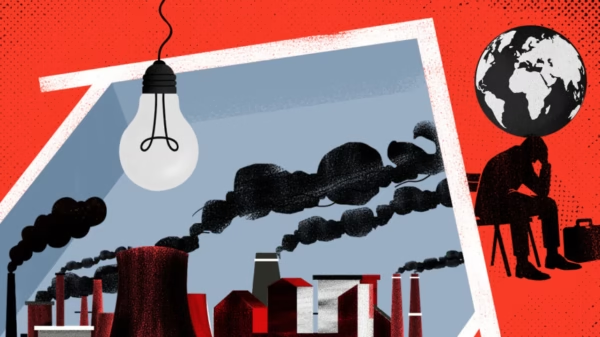

Air pollution has become the second leading cause of death among children under five worldwide, with Bangladesh among the hardest hit, according to a new study by international research group Zero Carbon Analytics (ZCA).
The report, titled “Structural Dependencies Perpetuate Disproportionate Childhood Health Burden from Air Pollution,” released on Wednesday, reveals that more than one in four deaths among children under five globally is linked to polluted air. In Bangladesh alone, over 19,000 children under five died in 2021 due to air pollution — an average of nearly two deaths every hour.
Researchers found that children in the least developed countries face a 94 times higher risk of dying from air pollution than those in developed nations. The disparity is attributed to heavy reliance on fossil fuels, pollution-intensive industries, and institutional inaction.
“Air pollution is one of the biggest threats to children’s health in Bangladesh and across the world,” said Dr. Sajid Hossain Khan, physician at the National Institute of Diseases of the Chest & Hospital. “Clean air is as essential as clean water. To ensure our children survive, grow up healthy, and thrive, we must act decisively now.”
The report identifies brick kilns, coal-fired power plants, household cooking smoke, and vehicle emissions as the main drivers of Bangladesh’s air pollution crisis. Rapid urbanization, intensified by climate-induced migration, has accelerated brick kiln-based construction, releasing dangerous fine particulate matter (PM2.5) that raises the risk of pneumonia among children.
Bangladesh ranks lowest in Asia for access to clean cooking technologies. Millions of households still burn wood, dung, and coal, filling homes with toxic smoke that harms pregnant women and children. Mothers using such fuels are 2.6 times more likely to give birth to underweight babies, while newborns in polluted households are four times more likely to die.
Children aged 3 to 5 exposed to fumes from solid fuels face a 47% higher risk of delayed cognitive development, the report warns.
“One of the strongest vaccines we can give a child is clean air,” said Dr. Zainab Yaro, a Nigerian pediatrician quoted in the report. “When a child struggles to breathe, it is not just a health issue — it is a matter of social and environmental justice.”
The study also exposes stark global financing inequalities. Between 2018 and 2022, the world spent $593 billion annually on fossil fuel subsidies, while less than 1% of that amount went toward addressing air pollution.
Lead researcher Joanne Bentley-McKune stated, “Air pollution is not just an environmental problem — it is a question of justice. Children are dying because of energy and economic systems they did not create.”
The report urges Bangladesh to upgrade brick kiln technology and transition to clean cookstoves, measures that could prevent over 16,000 child deaths each year. It calls for immediate climate action and a shift to renewable energy to safeguard children’s health and secure the nation’s future.