Qaium Hossain: From Building Bridges to Engineering Data for Public Good

- Update Time : Wednesday, 25 June, 2025, 01:17 pm
- 220 Time View

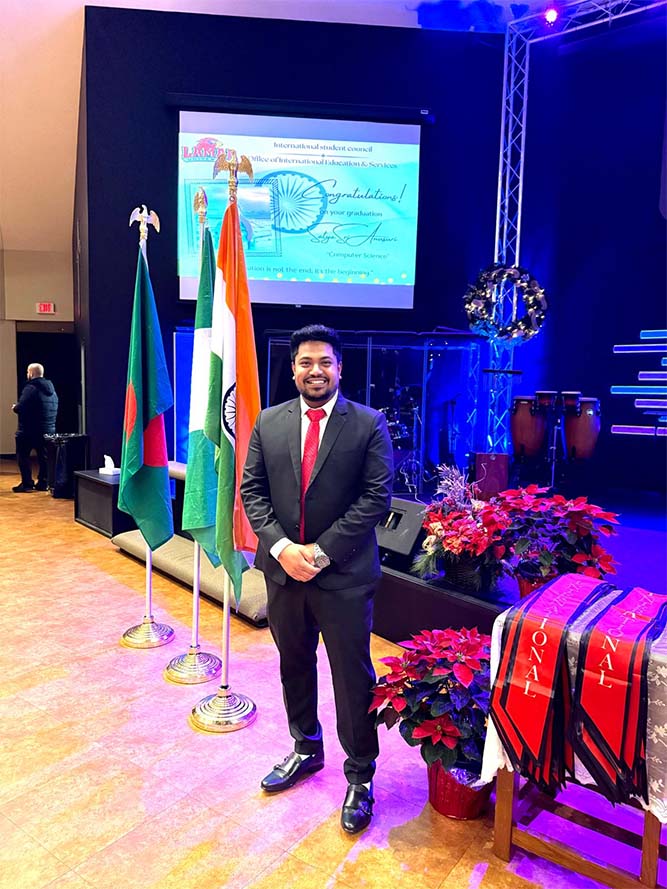
Online Desk : Qaium Hossain’s professional trajectory is a vivid representation of what it means to build bridges—both literally and metaphorically. Trained initially as a civil engineer in Bangladesh, and now evolving as a thought leader in data analytics and management information systems, Mr. Hossain stands at the intersection of infrastructure, digital transformation, and societal betterment. His academic foundation includes a Diploma in Civil Technology and a Bachelor of Science in Civil Engineering, where he actively participated in sustainable infrastructure initiatives. In particular, his work on the Bangabandhu Sheikh Mujib Railway Bridge Construction Project, one of Bangladesh’s largest infrastructural endeavors, was instrumental in enhancing cross-regional connectivity. “When you work on a national bridge project, you’re not just designing concrete and steel,” he stated. “You’re shaping the flow of commerce, education, healthcare, and opportunity for future generations.”
Mr. Hossain’s transition from physical infrastructure to digital systems was fueled by a realization: the future of engineering and public service lies in the convergence of data, technology, and human-centric design. His decision to pursue a Master of Science in Management Information Systems at Lamar University reflects a vision for holistic innovation—one where insights from civil infrastructure are harmonized with data-driven decision-making to improve not only technical systems but also policy outcomes. “Studying MIS opened my eyes to how intelligent systems can optimize entire sectors—be it energy, healthcare, or logistics,” he remarked. At Lamar University, he has maintained academic excellence while contributing to advisory boards and cross-functional projects that explore smart governance, enterprise resource planning (ERP), and citizen-facing analytics.
Beyond academics, Mr. Hossain is driven by a mission to leverage technology for inclusive and equitable development. His early career in engineering was rooted in community engagement, often working with local workers and civic officials to ensure compliance, safety, and transparency in public works. This ethos now guides his current research and analytics roles. As a voluntary Research Data Analyst for the American Scholarly Publishing Group Inc., he supports the academic ecosystem by managing research datasets, running econometric and machine learning models, and preparing insights that shape peer-reviewed publications. “Academic research must translate into real-world value,” he emphasized. “My role is to ensure that the data we use is not only accurate but also socially meaningful—so policymakers, NGOs, or small enterprises can learn and act from it.”
His scholarly contributions include several peer-reviewed publications in business intelligence, digital transformation, and socio-economic analytics. Noteworthy among these are “Python for Data Analytics: A Systematic Literature Review of Tools, Techniques, and Applications” and “Strategic U.S. Energy Market Insights: A Data-Driven Analysis of Fuel Consumption and the Rise of Electric Vehicles.” These papers do more than analyze trends—they advocate for sustainable and inclusive innovation, presenting dashboards, predictive models, and case studies aimed at helping small and medium-sized enterprises (SMEs) adapt to shifting market demands. “Innovation isn’t just about new tools—it’s about giving access,” he said. “Many SMEs in both the U.S. and South Asia struggle with digital transformation. My goal is to make data tools approachable, affordable, and impactful.”
In the academic sphere, Mr. Hossain is recognized not only as a researcher but also as a mentor and institutional contributor. At Lamar University, he serves as an advisory member in both the Business Analytics and Information Systems departments, helping shape course alignment with industry demands. He regularly mentors international students and early-career professionals, especially those transitioning between technical and analytical fields. His leadership roles, such as Vice President of the Operations Management Club at AIUB and current student advocate roles in Texas, reflect a strong sense of duty to help others navigate educational systems with purpose and resilience. “I see mentorship as a form of service,” he explained. “Everyone’s journey is unique, but if I can help someone discover their interdisciplinary path, then I’m adding value.”
Mr. Hossain’s industrial contributions are equally impressive, particularly in his applied work across procurement, logistics, and systems optimization. During his time with multinational firms and NGOs—such as the OBAYASHI-TOA-JFE Joint Venture and Action Against Hunger—he played key roles in aligning supply chains with strategic outcomes. His integration of ERP systems, procurement algorithms, and data compliance tools has improved efficiency, transparency, and responsiveness across sectors ranging from humanitarian logistics to industrial manufacturing. “Innovation isn’t just building something new; it’s refining existing systems to serve people better,” he explained. His insights have also been applied in cross-border collaborations and in U.S.-based production environments, where his understanding of both field operations and digital dashboards has led to measurable improvements in operations.
As the world navigates complex challenges—from climate change to urbanization to digital equity—professionals like Qaium Hossain represent a new generation of thinkers who combine discipline, ethics, and systems thinking. Whether it is through authoring literature reviews that shape academic curricula, optimizing data systems for healthcare access, or mentoring the next wave of cross-functional professionals, Mr. Hossain embodies the principle of socially responsive innovation. When asked about his future vision, he shared, “I want to be a changemaker across platforms—whether it’s supporting sustainable construction in Bangladesh or building AI-driven policy models here in the U.S. If my work can reduce inefficiency, amplify equity, or accelerate access to education and services, then I’m doing my job.”