BUILDING THE FUTURE OF RESILIENT INFRASTRUCTURE An Extended Interview with Civil Engineer : Md Mominul Haque
- Update Time : Monday, 9 March, 2026, 05:45 pm
- 52 Time View
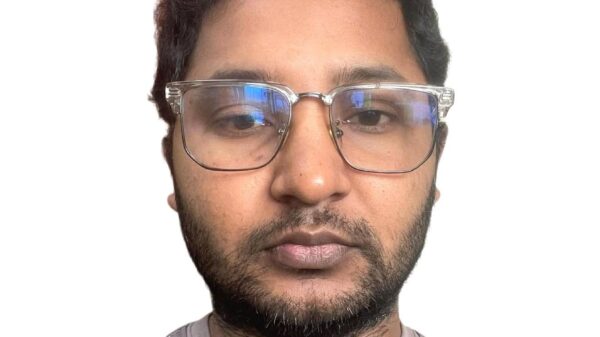
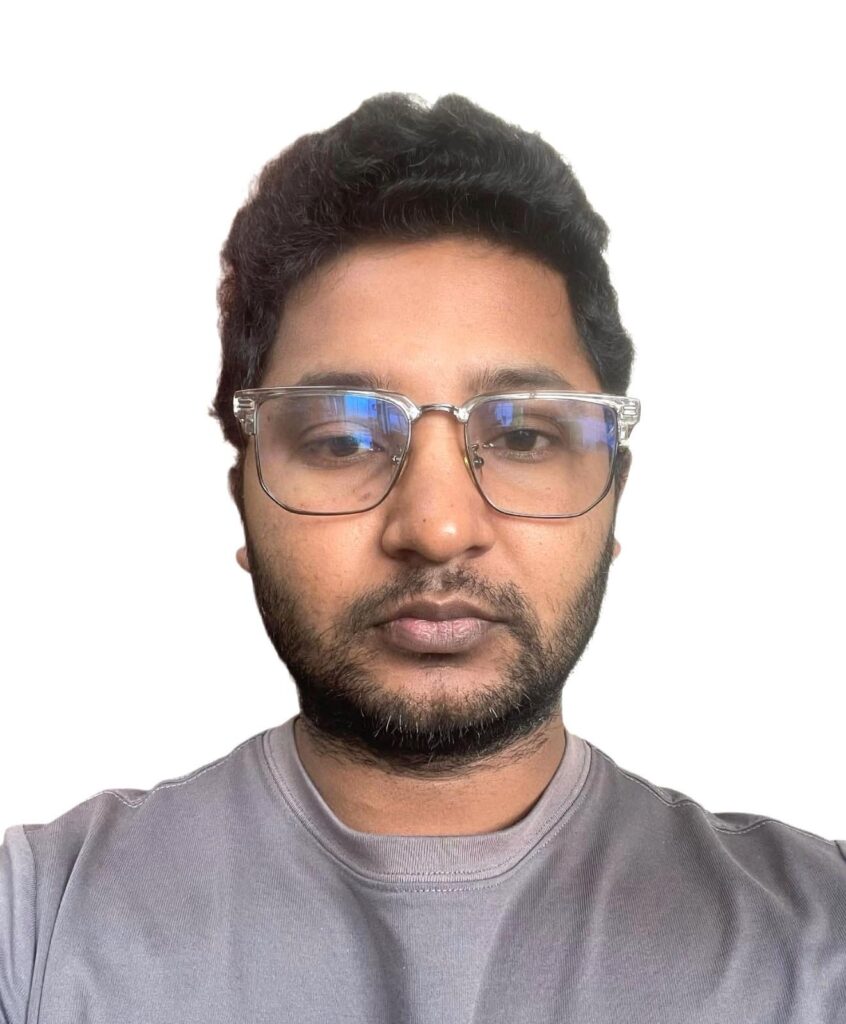
Online Desk : “The Ground Beneath Our Feet Is Trying to Tell Us Something” — On Geotechnics, Resilience, and the Human Side of Engineering There is a particular kind of patience required to build things that are meant to last, the patience to study soil before you pour a single foundation, to simulate traffic flows before you widen a single lane, to model a hundred-year storm before you lay a single drainage pipe. Md Mominul Haque, a civil engineer completing his Master’s degree at Lamar University in Beaumont, Texas, appears to have been born with precisely that patience. We meet on a Tuesday afternoon, the kind of humid Gulf Coast day that makes you think about drainage whether you want to or not. Haque arrives with a worn notebook tucked under his arm. He is focused and direct, yet quick to smile, and when he talks about civil engineering it is clear this is not merely a career choice. It is a calling.
Q: Mr. Haque, how would you introduce your background to readers unfamiliar with civil engineering?
A: I would describe civil engineering as the discipline that quietly holds everyday life together. The roads you drive, the buildings you work in, the pipes delivering clean water to your tap, the drainage systems keeping your neighbourhood from flooding after a storm, those are all civil engineering. My training spans structural design, geotechnical investigation, transportation analysis, and water infrastructure, which gives me a cross-cutting view of how all those systems interact with each other and with the land beneath them.
Q: You’ve studied engineering across two continents, China and the United States. How has that shaped your perspective?
A: It changes everything, honestly. During my bachelor’s at Hubei University of Technology, the pace of construction around me was extraordinary, tunnels, bridges, entire urban districts rising in months. You learn to think at scale and move fast. When I began my graduate work at Lamar University, I found that American engineering culture asks a different question. Not just how do we build this, but why are we building this, and will it still stand a hundred years from now? That shift, from scale to depth, has been my most important education.
Q: Geotechnical engineering seems to hold a special place for you. Why?
A: There is something philosophically compelling about it. You are working with material laid down over thousands of years and asking it to support something built in a matter of months. That demands enormous respect for what the ground is telling you. Through settlement patterns, pore pressure readings, and erosion data, the soil is always communicating, you just have to learn how to listen. My academic work on shallow and deep foundation systems, boring log analysis, and slope stability reinforced for me that getting the geotechnics right is not an optional step. It is the step everything else depends on.
Q: You conducted a significant project on coastal soil erosion in Plaquemines Parish, Louisiana. What did that work reveal?
A: That project was genuinely sobering. We applied the Revised Universal Soil Loss Equation, RUSLE, using site-specific K-factor and R-factor data to estimate erosion rates under 10-year and 100-year storm scenarios. When we compared our predictions against USGS land loss datasets, the correlation confirmed what many already fear: Plaquemines Parish is losing ground at a rate that is measurable, accelerating, and demands engineering responses that go beyond a levee here and a seawall there. The soil erodibility data showed exactly which areas are most vulnerable. The technical evidence is there. The question is whether decision-makers act on it before the storm, not after.
Q: You also worked on traffic signal optimisation using VISSIM microsimulation. That seems very different from soil mechanics.
A: Not as different as you would think. In both cases you are modelling a system under stress and asking: where does it break down, and what intervention prevents that? With our VISSIM simulation we evaluated signal timing plans, measured vehicle delay, and tracked queue lengths at a target intersection. Optimising the timing produced a 35 percent reduction in vehicle delay and a 40 percent decrease in queue length. That is not an abstract number, that is thousands of commuters getting home faster every single day. That is fuel not burned, emissions not released. Transportation engineering is often underestimated because roads look simple. But the moment you examine the flow data, the failure points, and the equity dimensions of who sits in traffic longest, it becomes one of the most human disciplines in engineering.
Q: What did your internship at SOLID BASE Construction Company teach you that the classroom cannot?
A: Everything about timing and consequence. In a classroom, if your calculation is off, you correct it on paper. On a construction site, if your elevation measurement is wrong, you may be pouring concrete in the wrong place and the entire sequence has to stop. I was supporting engineers on active sites, assisting with utility trench documentation, earthwork verification, redline corrections in AutoCAD, and daily progress tracking. You develop what I can only call situational awareness: you learn to read a job site the way a doctor reads a patient. You notice what is moving too fast, what is slightly out of tolerance, what might become a costly problem three weeks from now. That judgment cannot come from a textbook.
Q: How do you see water and stormwater infrastructure challenges intersecting with climate change?
A: They are inseparable. Climate change does not respect disciplinary boundaries. A more intense storm season means higher peak flows in stormwater systems. Rising sea levels alter the hydraulic gradients that conveyance networks rely on. More frequent drought cycles stress water supply and treatment infrastructure. Beaumont sits in one of the most weather-vulnerable corridors in the country. We have seen what a storm like Harvey can do when drainage infrastructure is not designed for worst-case events. Responsible infrastructure means designing for the storm that has not happened yet, not simply the one that has.
Q: What must engineers and institutions do to deliver truly responsible infrastructure development?
A: Three things above all. First, integrate resilience into the design from day one, not as an add-on, not as a budget line that gets cut when costs tighten. Second, use every tool available: advanced hydraulic modelling, geotechnical investigation, traffic simulation, GIS analysis. These tools exist so we do not have to guess. Third, and perhaps most importantly, engineers must communicate with communities, not just with other engineers. The most technically perfect solution fails if the people it is meant to serve do not trust it or have had no voice in its design. Infrastructure at its best is democracy made physical.
Q: What would you say to young engineers and students entering this field today?
A: Do not choose a lane too early. The most valuable engineers I have observed are those who understand how the disciplines speak to each other, how a geotechnical decision affects a structural one, how a drainage design affects a roadway alignment, how a water main failure cascades into a public health issue. Study broadly in your early years. Then, when you do specialise, you will bring a systems-level understanding that isolated training rarely produces. And pursue your FE licensure, not because a stamp makes you an engineer, but because the discipline of preparing for it forces you to reconcile everything you have learned into a coherent whole.
Q: Where do you see yourself in ten years?
A: Leading infrastructure projects that matter. Not necessarily the most visible or the largest, but projects where the engineering is done right, where the soil investigation was thorough, where the drainage will handle a hundred-year storm. Engineers rarely get monuments. But we get bridges that do not fall. We get communities that do not flood. We get foundations that hold. That is more than enough for me.
| ABOUT MD MOMINUL HAQUE
Md Mominul Haque is an M.S. Civil Engineering candidate at Lamar University, Beaumont, Texas (exp. December 2025) and holds a B.Eng. in Civil Engineering from Hubei University of Technology, China. His technical expertise spans geotechnical engineering, transportation systems, water and stormwater infrastructure, structural design, and construction project management. Proficient in AutoCAD, Civil 3D, VISSIM, EPANET, gINT, LPILE, GIS, Primavera P6, and Bluebeam. Certifications: OSHA 30, ProCore, AutoCAD, Surveying Training, Project Management, and Construction Trainee Engineer (CTE). Contact: mominkhan789456@gmail.com |