Overhead Absorption: Rate, Examples, Formula and Methods

- Update Time : Friday, 29 January, 2021, 03:05 pm
- 122 Time View

As items are eventually sold, absorption costing moves these costs from inventory to cost of sales, which aligns with GAAP requirements and results in fluctuating profit levels across accounting periods. Careful integration between accounting systems and operations is vital for accurate overhead absorption. Without this synergy, directors could face overstated expenses on financial statements due to improper attribution of fixed costs like rent or salaries. Machine hour rate method of absorption is used in those industries where machines are extensively used for production and manual labour is negligible or plays very minor role.
Allocate costs to unsold inventory
Examples include costs related to electricity, water, and supplies used in the manufacturing process. Absorption costing may report a higher net income during periods when inventory increases, as unsold units absorb a portion of the fixed manufacturing overhead. Variable costing reflects lower profits when inventories grow since it treats fixed overhead as an immediate expense on the income statement, reducing reported profit. This means direct materials, direct labor, and both variable and fixed manufacturing overhead should be part of the inventory cost. Because Nepal does not carry inventory, the income is the same under absorption and variable costing. Carefully study the arrows that show how amounts appearing in the absorption costing approach https://www.bookstime.com/ would be repositioned in the variable costing income statement.

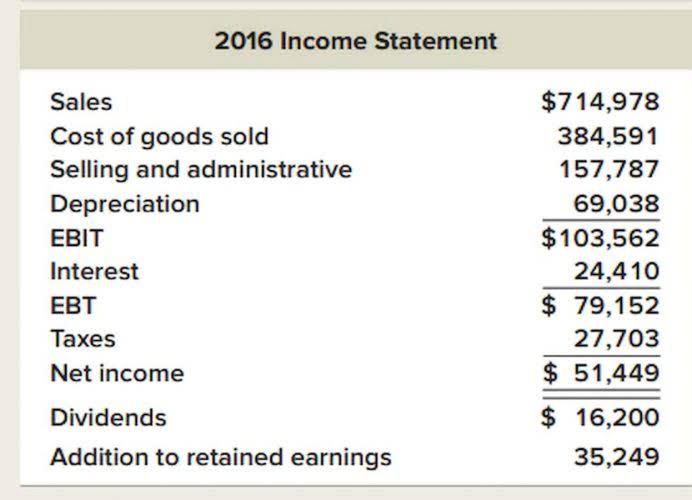
Absorption costing income statement
Essentially, the product’s cost becomes a comprehensive reflection of all incurred expenses. Given these limitations, some organizations choose to use variable costing alongside absorption costing for internal decision-making purposes. Variable costing offers a more direct approach to analyzing costs that vary with production, making it a useful tool for specific types of analysis where absorption costing falls short. To accurately incorporate direct labor costs into the formula for both scarves and dresses, the cost accountants must perform additional calculations. These would include summing various labor-related expenses such as hourly wages, overtime payments, employee benefits, and any 401(k) matching contributions. Contrastingly, period costs are expenses that are unrelated to the direct manufacturing of the product.

Which method of measuring production is most commonly used?
- This article will unpack the intricacies of absorption costing, providing clarity through examples and highlighting its significance in financial reporting.
- In this blog, we will break down absorption costing in simple terms, explain its calculation method, discuss its pros and cons, and provide real-world examples to show how it influences business operations.
- First, a business must ultimately recover the fixed factory overhead and all other business costs; the total units sold must provide enough margin to accomplish this purpose.
- With variable costing, all variable costs are subtracted from sales to arrive at the contribution margin.
- Overall, absorption costing gives businesses a better understanding of all the costs involved in production and ensures compliance with industry standards.
At the same time, accurate absorption costing boosts the value of inventory by valuing it at full production cost. Absorption costing not only influences decision-making and strategic planning absorption costing formula but also profoundly affects a company’s financial statements. The higher per-unit cost of goods sold, as calculated by this method, tends to reduce the reported profit margins in periods when production volumes are high but sales are lower.
- Effective cost accounting systems are designed to track these components accurately.
- Also, indicate the operational income equal to the gross profit minus the selling and administrative expenses.
- The case demonstrates how proper absorption costing implementation can provide crucial insights for business strategy and operational efficiency.
- Some overheads such as utilities for production can also be considered variable costs of production.
- Absorption costing includes all manufacturing costs in the value of your inventory.
- Fixed overhead is a necessary component of production, but it can inflate the actual cost of manufacturing.
In addition, the examples assumed that selling, general, and administrative costs were not impacted by specific actions. It is now time to consider aggregated financial data and take into account shifting amounts of SG&A. The following income statements present information about Nepal Company. On the left is the income statement prepared using the absorption costing method, and on the right is the same information using variable costing. For now, assume that Nepal sells all that it produces, resulting in no beginning or ending inventory. The rationale for absorption costing is that it causes a product to be measured and reported at its complete cost.

I am a finance professional with 10+ years of experience in audit, controlling, reporting, financial analysis and modeling. I am excited to delve deep into specifics of various industries, where I can identify the best solutions for clients I work with. Change in the opening or closing stock does not affect the per unit cost. Tools like Katana help address these challenges, providing real-time insights into inventory, assisting with inventory optimization, offering scenario analysis tools, and automating cost tracking. This insight is also valuable input for demand planning, helping align production forecasts with cost structures. This works alongside the revenue recognition principle to ensure income is reported accurately over time.

- This distinction improves the clarity of financial data, enabling businesses to make more informed financial decisions and maintain accurate income statements.
- A key aspect of absorption costing is that it lets a company allocate some production costs to the income statement and some to the balance sheet—specifically for goods produced but not yet sold and held as inventory.
- The absorption costing formula calculates the cost assigned to each unit produced.
- These nonmanufacturing costs are treated as period expenses, meaning they hit your income statement in the period they occur, rather than being attached to inventory.
- Inaccurate allocation of fixed overhead costs can distort product costs, leading to incorrect profit calculations.
B2Bridge transforms how Shopify merchants manage their wholesale operations by providing sophisticated tools that complement absorption costing methodologies. To prevent inflated net income, businesses should frequently review inventory levels and ensure that costs related to production are aligned with sales. This approach ensures accurate profit reporting and helps avoid misguided decisions based on inaccurate financial results. Choosing contra asset account between absorption costing and variable costing depends on how businesses want to allocate costs and report profits. Each method impacts how manufacturing costs are treated and reported on the income statement.