The Future of AI in Healthcare, Enterprise & Emergency Management Expert Perspectives from Razia Sultana

- Update Time : Wednesday, 1 April, 2026, 03:49 pm
- 29 Time View
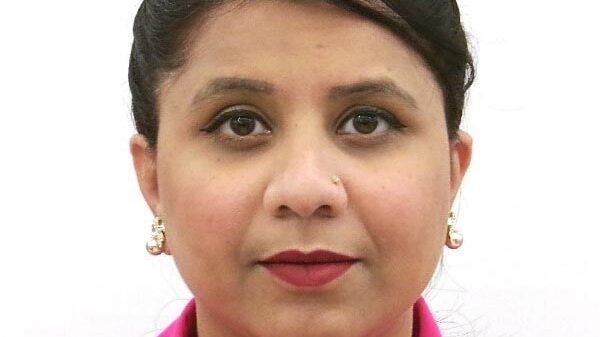
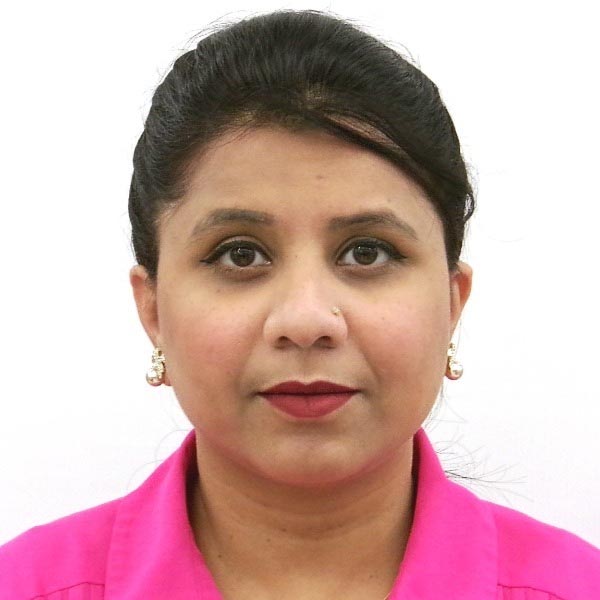
Online Desk : Razia Sultana is a management information systems researcher and applied AI specialist whose work spans healthcare predictive analytics, blockchain-secured health data infrastructure, and MIS platforms for emergency response coordination. Holding an M.S. in MIS from Lamar University, she has published over eight peer-reviewed works attracting more than 100 independent citations. Her sole-authored analysis of AI-powered BI dashboards has drawn 66 citations from researchers across four continents, and her work has been independently recognized in two Elsevier journals, including the International Journal of Disaster Risk Reduction. A recipient of the Best Paper Presentation Award at ASRC 2025 and a manuscript reviewer for the Review of Applied Science and Technology, Sultana brings over 13 years of enterprise ICT experience to research designed not merely to advance knowledge but to deploy it, in community health centers, in rural hospitals, and in emergency operations centers across the United States.
- What first drew you to AI and information systems research?
Sultana: Growing up in Dhaka, I watched organizations make consequential decisions, with very limited information. I became absorbed by the question of how much better those decisions could be with the right data at the right moment. When I completed my MBA in Human Resource Management, I saw firsthand how workforce analytics could transform organizational outcomes. Moving to the United States for my M.S. in MIS at Lamar University gave me access to tools, datasets, and a research community operating at the absolute frontier of applied AI. Everything I do now is oriented toward one question: how do we get AI-driven intelligence into the hands of the institutions and communities that need it most?
- Your sole-authored paper on AI-powered BI dashboards has drawn 66 independent citations. Why does it resonate so broadly?
Sultana: Because the problem it addresses is universal. Every institution that manages complexity and resources, hospitals, emergency agencies, enterprises, generates enormous volumes of data but still makes operational decisions slowly and reactively. My paper documented the frameworks, metrics, and real-world deployment architectures that allow organizations to translate raw data into real-time decision intelligence. The fact that researchers in emergency management, financial services, healthcare informatics, and consumer behavior have all independently cited it tells me this is not a sector-specific challenge. It is a national infrastructure challenge, and that is the challenge my entire research program is built around.
- Your research on diabetes prediction addresses a healthcare equity gap. Can you explain the stakes?
Sultana: Roughly 8.5 million Americans are living with undiagnosed diabetes right now. Early detection is the single most cost-effective intervention available, catching the disease before complications develop prevents enormous suffering and cost. But the AI diagnostic tools capable of enabling early detection at scale are concentrated in large, well-resourced hospital systems. Community health centers serving the most vulnerable populations simply do not have access to them. My research on Stacking ensemble classifier architectures produces open-source, federated models that can run on distributed clinic datasets without centralized infrastructure. The goal is deployability where the need is greatest, not performance on a benchmark leaderboard.
- What future areas of research will most benefit U.S. healthcare and emergency infrastructure?
Sultana: Two convergences stand out. The first is federated machine learning with secure multi-party computation, training powerful AI models across distributed, privacy-sensitive datasets without ever moving the underlying data. For healthcare, this means we can build diagnostic AI trained on the full diversity of the U.S. patient population without creating the centralized data repositories that ransomware actors target. The second is natural language processing integrated into emergency MIS, moving from dashboards that display data to systems that synthesize multi-agency situation reports in real time and surface the specific insight a decision-maker needs during the critical first hours of a disaster response. Both are deployable today with the right frameworks, and that is exactly where my research is focused.
- How will your work strengthen U.S. healthcare data security?
Sultana: Data security independence is fundamentally an infrastructure design problem. The U.S. healthcare sector spends over $10 billion annually recovering from data breaches, more than any other industry, for more than a decade running. That is not a technology failure; it is an architectural failure. The data exchange frameworks used by most hospitals were not designed with modern threat actors in mind. My research produces blockchain-secured, open-standard data exchange protocols specifically designed for adoption by rural hospitals and community health centers, the institutions most targeted by ransomware and least equipped to defend themselves. Every institution that adopts these protocols represents a real reduction in the attack surface available to bad actors. The path to genuine data security independence runs through open, accessible, deployable infrastructure design. That is the work I am committed to, and I believe it is among the most consequential engineering challenges of our generation.
- What are your goals for national-scale impact?
Sultana: I will not consider my work successful until it is deployed, until the AI models I have developed and validated in simulation are running inside real community health centers, informing real clinical decisions for real patients. Publishing is a step. Citations are a step. But deployment is the finish line. In the near term, I am launching three concrete projects: a federated AI chronic disease monitoring system piloted with Southeast Texas community health networks; a blockchain healthcare data exchange framework for rural hospital networks that currently lack security infrastructure; and an NLP-based emergency coordination platform piloted with Jefferson County Emergency Management and proposed for national adoption through FEMA’s National Preparedness System. The technical solutions exist. What remains is the implementation pathway, and I am fully committed to seeing it through for the benefit of American communities.